Pages

Showing posts with label EDIBLE WEEDS. Show all posts

Saturday, 3 November 2018

Wilting, Weeds and Potted Gardening

What’s on the show today?

Why are those plants wilting even though you’ve watered them? Find out in Plant Doctor. Would you eat the weeds in your backyard we ask in Vegetable Heroes? Gardening in pots is the topic for part 3 of ‘gardening in tight spaces” in Design Element.

PLANT DOCTOR

Bacterial Wilt 
It seems like all kinds of exotic or unusual diseases attack our produce garden and this one’s no exception.
There you are, religiously watering everyday, making sure the soil’s moist, apply the compost and mulches
Bacterial Wilt of Cucumber
Then without explanation or warning, leaves start to wither or wilt at random and sooner rather than later, your whole plant dies.
Let’s find out what can be done about this problem.
I'm talking with Steve Falcioni from www.ecoorganicgarden.com.au

The bacterial wilt can be the result of fungus, bacteria or a virus that is spread via the soil.
Bacterial wilts largely affect plants in the Solanaceae family.
Bacterial Wilt of Pepper
  • It starts off with the plant growing really well, but then over a few days, bit by bit, leaves start to wilt, then the whole plant dies.
  • On examining the stem, you'll find that it's brown inside.
  • That's because the bacteria has damaged the roots, making uptake of water and nutrients very difficult.
 In this case it's a soil borne bacteria.
The damage is done to the roots which then can’t absorb enough water, or carry the water through the plant tissue, so then you get that wilting effect. 
The problem could have been transmitted via your footwear, garden tools, or plants bought in from another source.
Or it could have already been in your soil but if the soil isn't treated well, the bacteria numbers have built up and now can affect your plants.
Pull the affected plant out, and don’t plant the same type of plant in that same spot. 
Leave that spot fallow for 3 years or plant a green manure crop .
If you have any questions about chives, either for me or for Ian, why not email realworldgardener@gmail.com or write in to 2RRR P.O. Box 644 Gladesville NSW 1675.

VEGETABLE HEROES

Eat Those Weeds.
What weeds are popping up in your garden right now?
As agriculture land becomes a more rare commodity, should we consider harvesting and eating weeds?
apparently there’s a movement afoot that thinks just that,so I thought I’d explore what are the does and don’ts of eating weed plants.
After all, how hard is it to grow them right?
Here are some points to think about first.
  • Did you know that many common weeds are edible, and some are more nutritious than store-bought greens?
  • But you need to do your research before you go hunting for weeds in your garden, nature strip or nearest park.
  • Most importantly, never eat anything you cannot positively identify.

Got some dandelions, for example?
Dandelion flower and seedhead

The yellow petals and young leaves can be used in salads, and the roots can be used as a coffee substitute.
From an article by Teagan Osborne on the ABC website, Teagan spoke to a Sydney-based nutritionist Catherine Saxelby who said when compared with store-bought greens such as bok choy, rocket, basil, and parsley, many edible weeds were actually higher in important vitamins, minerals and nutrients.
Ms Saxelby said most edible weeds were high in phytonutrients and phytochemicals such as beta-carotene that help protect the body against disease, as well as vitamin A, vitamin C, and minerals such as potassium.
"Because they haven't been bred the way commercial crops have been bred, they actually do seem to have higher concentrations of their natural vitamins, and minerals and phytonutrients," she said.
These days it’s common knowledge that fruits and vegetables are bred for less bitterness, greater yield, ease of transport and bigger leaves.
"You never got that with the wild greens like dandelion and chickweed and purslane, which have just been left to grow themselves," she said.
"So … not only are they free, and they seem to have a greater taste, a stronger more alive taste, they actually appear to be higher in certain nutrients."
But edible weeds do have some nutritional drawbacks.
Many wild leafy greens, like the sorrel varieties and purslane, have high concentrations of oxalic acid, which has been linked to kidney stones and is poisonous in very large amounts.
Oxalic acid is also present in store-bought foods including almonds, spinach, bananas and tea.
"So you can't avoid it. But what you want to avoid is eating large amounts of it in one go.
"[For example] if you ate a cup full of sorrel I would think that would be a very large quantity … half a cup of raw sorrel for your first time would be a good way to start."
A growing interest in weed foraging has seen "edible weeds tours" spring up in many major Australian cities.
How can you go about making sure you’re getting the right weeds?

  • You could try reading a book on edible weeds, taking an edible weeds tour or studying reputable online sources are good places to start.
  • There are several Australian books on the subject, including a handbook by Melbournites Adam Grubb and Annie Raser-Rowland.
  • Although most of the plants that we call weeds, especially the annuals, are edible … there are some very toxic plants.
  • It can’t be said enough that it's really important to know beyond reasonable doubt that what you're about to eat is what you think it is and … to know that it's actually considered edible.
  • The other thing to be aware of is the environment your weeds have come from.
  • You need to consider whether the area you're picking in is likely to be polluted and also whether the plants may have been sprayed with herbicides or pesticides.
  • In terms of not eating things that have been sprayed, I think the safest place to eat plants from is your own backyard.
  • To give you just a small taste of how many edible weeds are out there, here are
Two of the easiest to identify
What next and Why are they good for You?
Dandelion (Taraxacum officinale)
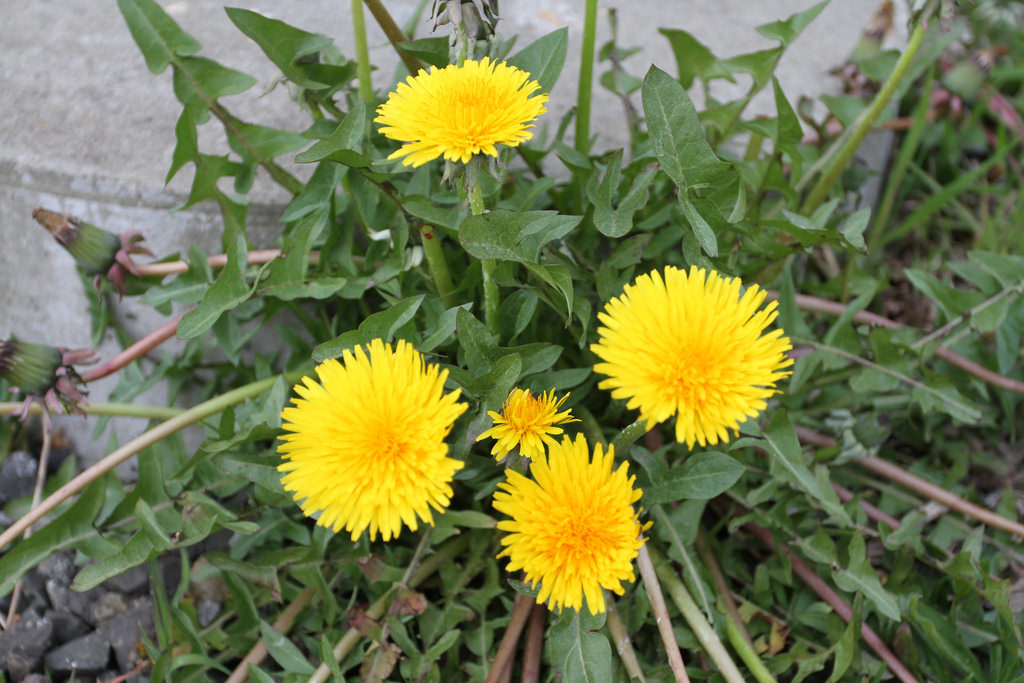
Dandelion is probably one of the most common and recognisable varieties of edible weeds and it's also very versatile.
Dandelion is a perennial plant with jagged, bright green leaves to 30cm long, a hollow flower stem to 30cm and one terminal yellow daisy.
Dandelions are good source of essential vitamins.
The leaves, flowers and roots of the dandelion are all edible.
The yellow petals from the dandelion flower and the leaves can be eaten in salad, and the leaves can also be cooked and eaten like spinach.
The roots of the plant can also be dry-baked and used as a coffee substitute.
The leaves are an excellent source of vitamin A, vitamin K, calcium and iron.
Another easy one.
Chickweed (Stellaria media)
Chickweed is often popping out at this time of year.
Did you know that Chickweed can be cooked or eaten as a salad vegetable?
It's a little, delicate, herbaceous winter green, also rich in vitamins A, B and C, and a good source of Omega 6 fatty acid.
It can be cooked like spinach or used as a salad green, and since ancient times it has been used to treat itchy skin conditions as a topical ointment or a poultice.
There’s a whole lot of others like clover, Fat Hen, Crowsfoot Grass, Wild fennel, Cats Ear or Flat Weed, and Docks.
You just have to be prepared to look them up to make sure you’re getting the right thing before you tuck into them.
THAT WAS YOUR VEGETABLE HERO FOR TODAY

DESIGN ELEMENTS
Gardening in Tight Spaces part 3: pots
Have you run out of room in your garden or is your garden just too small to do much with?
Never fear, gardening in pots as a great alternative and it doesn’t have to be that hard or look ugly if you choose the right combinations.
There is that initial outlay, but if you choose carefully, your pots will last for years, and not end up cracked and broken.

Let’s find out what it’s all about.
I'm talking with Peter Nixon, garden designer and director of Paradisus garden design.

Peter suggests if you want decorative or ornamental plants, why not go for something in the Bromeliad family, especially the large Alcantareas.

Alcantarea heloisae

  •   Alcantareas are sun hardy, such as A. heloisae, A. patriae, A exentensa, A. Glaziouana. 
  • All of these have plasticky hard leaves that put up with harsh exposure. 
  • Then there’s Kalanchoe orgyalis, known as Copper Spoons, or K. hildebrandii, known as silver spoons. 
  • Also, Kalanchoe millottii, and K. blossfeldiana. 
  • You could also choose Aloes but be mindful of the summer heat for these guys. 
  • Finally, the cardboard plant, or Zamia furfuracea. 


Saturday, 16 July 2016

Flowers and Weeds and Coffee Trees


PLANT DOCTOR

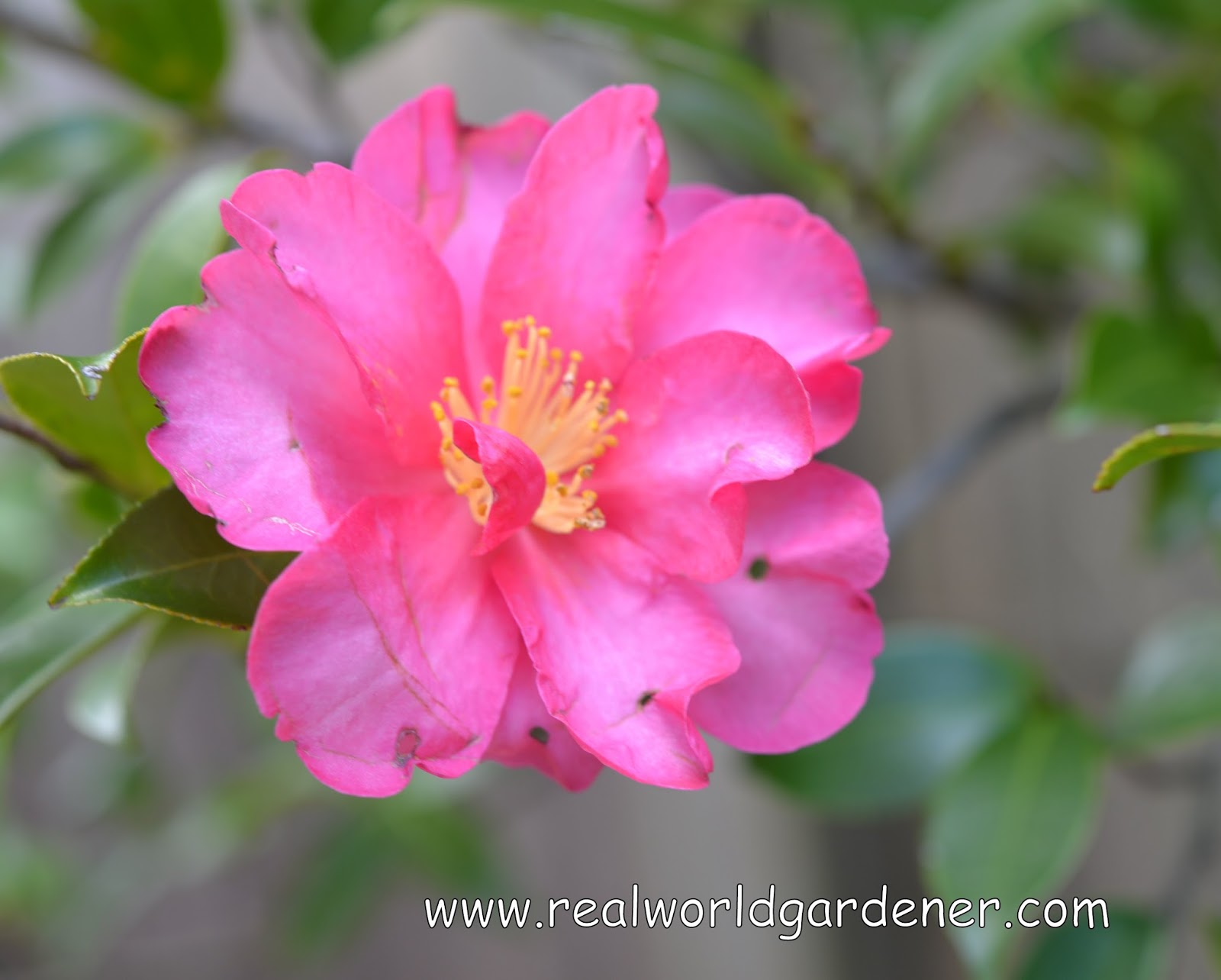
If you’ve ever been travelling through Europe, or even England, you might have noticed that Camellias aren’t one of those plants that you’re likely to come across all that much.
According the English Broadcaster and gardener Monty Don, over there, the main problem with the Camellia japonica and Camellia reticulata varieties is that, when their flowers start to fade, they cling to the shrub, looking for weeks like used tissue. The only way to deal with this is to dead-head each bloom by hand – otherwise it is like having a wonderful party then failing to tidy up afterwards.
Add caption

The combination of this extra work and the belief that most camellias were tender and therefore needed special protection meant that interest in camellias went into decline at the beginning of the 20th century.
But for us here in Australia, Camellias are one of the most popular winter- and spring-flowering shrubs, providing a vivid splash of colour when little else is in bloom.
So today we’re talking how to look after them when disease strikes these wonderful shrubs.
So let’s find out how to fix this.I'm talking with Steve Falcioni, General Manager of www.ecoorganicgarden.com.au

In this country the greatest problems are from wet winters and spring frosts, so to get away from this you need to add grit and compost to the planting hole so that the roots do not sit in wet soil.
Freezing conditions dehydrate the leaves, which lose more water as they thaw, especially if exposed to wind.
Camellia japonica Lovelight
The frozen roots mean that no water is taken up to replace this, and the result is often that the top or exposed part of the shrub dies back.
The extent of the damage will not become fully apparent until spring, when new growth appears and, if the roots are damaged, will drop and die back.
Draping fleece over the plant is a short-term remedy, but the most importantfactor is to provide permanent shelter from the wind.
If you have a camellia in a pot, wrap the pot in bubble wrap or bring it indoors in cold weather.
If you have any questions about problems with your Camellias or any other shrub, drop us a line to realworldgardener@gmail.com or write in to 2RRR PO Box 644 Gladesville NSW 1675

VEGETABLE HEROES


Weeds you can eat. 
What weeds are popping up in your garden right now? 
With the world’s population bursting at the seams and agriculture land becoming a more rare commodity, are we to start harvesting and eating weeds?There’s a movement afoot that thinks just that so I thought I’d explore what are the does and don’ts of eating weed plants.After all, how hard is it to grow them right? Here are some points to think about first. Did you know that many common weeds are edible, and some are more nutritious than store-bought greens? But you need to do your research before you go hunting for weeds in your garden, nature strip or nearest park. Most importantly, never eat anything you cannot positively identify.
Puslane weed
Got some dandelions, for example? The yellow petals and young leaves can be used in salads, and the roots can be used as a coffee substitute.
Most edible weeds were high in nutrients such as vitamin A, vitamin C, and minerals such as potassium. Weed haven't been bred the way commercial crops have been bred, which is for less bitterness, greater yield, ease of transport and bigger leaves.
Weeds like dandelion and chickweed and purslane, have just been left to grow themselves. The best this is that they're free are dead easy to grow and appear to be higher in certain nutrients.
But edible weeds do have some nutritional drawbacks.
Many wild leafy greens, like the sorrel varieties and purslane, have high concentrations of oxalic acid, which has been linked to kidney stones and is poisonous in very large amounts.
Something to note:
 There's no need to panic because oxalic acid is also present in store-bought foods including almonds, spinach, bananas and tea.
A growing interest in weed foraging has seen "edible weeds tours" spring up in many major Australian cities.
How can you go about making sure you’re getting the right weeds?
You could try reading a book on edible weeds, taking an edible weeds tour or studying reputable online sources are good places to start.
There are several Australian books on the subject, including a handbook by Adam Grubb and Annie Raser-Rowland.
Although most of the plants that we call weeds, especially the annuals, are edible … there are some very toxic plants.

Yellow flowered Oxalis


Dandelion weed
One important aspect that you need to be aware of is the environment your weeds have come from.
You need to consider whether the area you're picking in is likely to be polluted and also whether the plants may have been sprayed with herbicides or pesticides.
In terms of not eating things that have been sprayed, I think the safest place to eat plants from is your own backyard.
To give you just a small taste of how many edible weeds are out there, here are
Two of the easiest to identify
What next and Why are they good for You?
Dandelion (Taraxacum officinale)
Dandelion is probably one of the most common and recognisable varieties of edible weeds and it's also very versatile. Dandelion is a perennial plant with jagged, bright green leaves to 30cm long, a hollow flower stem to 30cm and one terminal yellow daisy.
Dandelions are good source of essential vitamins. The leaves, flowers and roots of the dandelion are all edible. The yellow petals from the dandelion flower and the leaves can be eaten in salad, and the leaves can also be cooked and eaten like spinach. The roots of the plant can also be dry-baked and used as a coffee substitute.
The leaves are an excellent source of vitamin A, vitamin K, calcium and iron. 
chickweed is not just for chickens
Another easy one.
Chickweed (Stellaria media) Chickweed is not just for chickens
Chickweed is often popping out at this time of year.
Did you know that Chickweed can be cooked or eaten as a salad vegetable?
It's a little, delicate, herbaceous winter green, also rich in vitamins A, B and C, and a good source of Omega 6 fatty acid. It can be cooked like spinach or used as a salad green, and since ancient times it has been used to treat itchy skin conditions as a topical ointment or a poultice.
There’s a whole lot of others like clover, Fat Hen, Crowsfoot Grass, Wild fennel, Cats Ear or Flat Weed, and Docks.
You just have to be prepared to look them up to make sure you’re getting the right thing before you tuck into them.

DESIGN ELEMENTS


Climbers for a Tropical Zone

In a Tropical Zone there are many climbers that will grow well in the warmer climates.  One thing I did notice when I was thinking about the plants suitable for warmer climates is that the climbers suitable for this area do have brightly coloured flowers.
There’s so much to be said about climbing plants, even if you have a small garden, climbers can be used to hide walls, or fence off boundaries, without spreading into the limited space of the garden.
Mandevilla sanderi
They are also a cheap and easy way to cover up something unsightly, such as a shed or water tank, or to soften a harsh wall, fence or tree trunk.This segment is all about tropical climbers which by the way don’t always have to grow in tropical climates because you know, gardeners want to test the boundaries.Let’s find out. I'm talking with Glenice Buck, Consulting Arborist and Landscape Designer.


The Pandorea species are exceptional because they can tolerate quite a range of conditions and temperatures even though they’re from tropical zones.
On the other hand, Mandevillas not so much, but then again, indoor is not a bad idea for these if you like them.
Glenice's top 5 tropical climbers are

  • Pyrostegia venusta
  • Beaumontia grandiflora
    Bougainvillea
  • Climbing Frangipani (Chonemorpha fragrans)
  • Yellow Allamanda or Golden Trumpet Vine
How about "Bauhinia Corymbosa" Or Butterfly Vine
Butterfly vine is an evergreen vine in sub-tropical conditions that can be semi-deciduous in cooler climates with older leaves dropping in cold winters, a beautiful vine with attractive and unusual foliage and small orchid-like flowers with unique 2 lobed leaves hints at its placement in the pea family. All through the warmer months there are plenty of pale pink flowers with dark veining and ideal for covering a pergola, fence or over a tree and is spectacular as a groundcover especially when in flower.

PLANT OF THE WEEK


Coffea arabica Coffee Tree
 Would you like to grow a relatively problem free large shrub  or small tree that grows well in sub-tropical and cooler climates? 
Coffea arabica


Not only that, but in as little as three years the ( coffee) tree will be covered with white, jasmine-scented flower clusters.  
Then is followed by masses of green berries that mature to a beautiful cherry-red?What could this plant be?
Let’s find out. I'm talking with the plant panel:Karen Smith, editor of Hort Journal www.hortjournal.com.au  and Jeremy Critchley, The Green Gallery wholesale nursery owner. www.thegreengallery.com.au


Coffea arabica is a small understorey tree, 2 to 8 m tall, with unusual horizontal branching, and jasmine scented white star-shaped flowers that appear all along the branches. Its leaves are evergreen and usually shiny.

When Jeremy was living in Tanzania coffee plantations were under-planting nut trees.
In Laos, the trees were trimmed to 3 - 4 metres in height in plantations to make it easier for mechanical harvesting. These were also an understorey plant.

So, what sort of micro climate do you need to grow coffee? 
Coffee prefers temperatures between 15 and 24 degrees C, although if it’s within the range of 7-30 degrees C, it will still grow quite well. 
Choose a shady spot, sheltered from cold or hot winds.
Coffee berries on Coffea arabica
Frost is the big enemy in cooler climates, and below -2 degrees C  will probably kill the plant. 
The good news is that home-grown coffee doesn’t get any pests or diseases.
Did you know that coffee has been grown in Australia for over 200 years? Why it stopped for a while was because labour costs made it unviable but with mechanical harvesting, the interest and growth of plantations saw a resurgence from the 1980’s.