Pages

Thursday, 13 February 2014

Butterflies Are Free


REAL WORLD GARDENER Wed. 5pm 2RRR 88.5fm Sydney, streaming live at www.2rrr.org.au and Across Australia on the Community Radio Network. www.realworldgardener.com
Real World Gardener is funded by the Community Broadcasting Foundation
REALWORLD GARDENER NOW ON FACEBOOK
The complete CRN edition of RWG is available on http://www.cpod.org.au/ , just click on 2RRR to find this week’s edition. The new theme is sung by Harry Hughes from his album Songs of the Garden. You can hear samples of the album from the website www.songsofthegarden.com

WILDLIFE IN FOCUS

with ecologist Sue Stevens
Do you think about what to plant for the birds and bees in your garden?

But do you then think about what to plant to attract butterflies? Have you ever visited a butterfly house when you’ve been holidaying somewhere and thought, wow, they look nice.
Well you can have butterflies come to your garden if you think about a few things first.


Butterflies aren’t just pretty, they’re useful in pollinating flowers.
But attracting butterflies isn’t something that’s left to chance.
You have to incorporate plants that serve the needs of all life stages of the butterfly.

The insects need places to lay eggs, food plants for their larvae (caterpillars), places to form chrysalides and nectar sources for adults.


The most important things is to stop using insecticides.
Even “benign” insecticides such as
Dipel which contains Bacillus thuringiensis are lethal to butterflies while they’re at the caterpillar stage.
Photographing butterflies is easier in the warm humid environment of a butterfly house. Try chasing a Blue Triangle or a Monarch butterfly in the cool of your garden with your camera. Very difficult.


If you have any questions about butterfly gardening, why not drop us a line to. realworldgardener@gmail.com or write in to 2RRR P.O. Box 644

VEGETABLE HEROES

Sweet Corn  or Zea mays var. saccharata  

Is there a fruit or vegetable you detest?
Maybe it’s the texture of it in your mouth you can’t stand, or the smell puts you off, especially when it’s being cooked.
I’m not talking allergy type of detest, but purely because, Nah… you just don’t like it.
You don’t order any food that even has a slight hint of it being there.
That’s my lot with corn.
Well, after four years of broadcasting, I’ve only mentioned sweetcorn once, and it’s time to look over why corn cob lovers want to hear.
So you might think I know nothing of corn growing, but no, from my years at Yates in technical advice, it seems that growing corn has it’s fair share of problems and I’ve heard and solved most of them.
Sweet Corn  or Zea mays var. saccharata  is a grass, native to the Americas.
Yep, a grass.
But wait, Corn is actually a vegetable, a grain, and a fruit.
It’s a vegetable because it’s harvested for eating; a grain because it’s a dry seed of a grass species; and a fruit because that’s the botanical definition. Corn (Zea mays) is sometimes called a vegetable grain.
Because a vegetable is defined as a plant cultivated for an edible part or parts such as roots, stems, leaves, flowers, or seeds/fruit, corn is a vegetable.
If you wanted to be very picky, all cereal grains could be called vegetables, but by convention we separate the cereal grains from the rest of the "vegetables" such as peas, lettuce, potatoes, cabbage

Corn has a long, long history.
Apparently tiny ears of corn have been discovered at ancient village sites on the Mexican plateau or the highlands of Guatemala.
Kernels dating back to 6600 BCE have also been found in caves in Mexico.
There’s even evident that in central Mexico, about 7000 years ago, sweetcorn was domesticated from wild grass.
From all this we can gather that corn’s been around quite a while.
Before you get too fired up, the fresh, or sweet corn, the kind we like to eat as corn on the cob, didn’t come about until the 1700s.
Along with wheat and rice, corn is one of the world’s major grain crops.
Would you have guessed that only 9 percent of all the corn grown is used to produce food for humans.
64% of all corn grown is used as feed for livestock.
Then there’s food manufacture which include corn meal and other food products such as cooking oils, margarine, and corn syrups and sweeteners (fructose) as breakfast cereals, flour.
But there’s also non-cooking uses such as dyes, paints, chemicals, Ethanol, a renewable fuel made from corn, has shown the possibility of becoming a major renewable fuel for the world’s automotive industry.


That’s just to name a few.
 Much of the corn now grown around the world is genetically modified for herbicide and/or pest resistance, so a good reason to grow it yourself.
Sweet corn belongs to the grass family. Poaceae
There are various different types of corn and some have been around longer than others.
By the way, Popcorn is made from a corn variety that dries on the stalk, while the corn we eat on the cob is referred to as sweet corn.
When to Plant-
You can plant sweetcorn all year round in tropical and subtropical climates, in spring and midsummer in temperate and arid zones and late spring to early summer in colder regions.
Before planting out your corn, soak the seeds in a shallow saucer of water overnight.
You can either sow the seeds directly into the garden, 25cm apart in short rows 50-60 cm apart, or in Seed trays.
Dig in some chook poo a couple of weeks before you plant the corn.
By sowing your corn seed directly into the garden you mightn’t always get a 100% germination rate; and you may have breaks in your rows.
Particularly if you’re growing the high sugar varieties.
Try growing your corn in seed trays or in punnets, then transplant the seedlings out into the garden, when they are 50 to 75mm tall. You will then have complete rows.
All grasses are wind pollinated-they have no nectar or odour to attract a physical pollinator, so sweetcorn needs to be planted closely for pollination.
Plant a hand span apart.
You could also try planting your corn in a circle sow your corn seeds and water them in (a good Soak).
Corn likes lots of compost, comfrey, old animal manures, liquid fertilisers and heaps of mulch (around the main stem of the plant) give them a good soak around the roots, every second day, depending on the weather conditions.
Something you need to know.
Corn plants have separate male and female flowering parts.
The corn plant consists of the tassel (male flowers) at the top of the plant and kernels (female flowers) on the cob.
Pollen grows on the tassels, or male parts of the corn plant.
It falls down onto the silks, or female parts of the plant. Each silk is connected to a kernel of corn inside each ear.
If pollen reaches the silk, it causes a corn kernel to grow.
If a silk doesn't receive pollen, the kernel stays small.
Don’t wet the tassels as they emerge.
If you have a small garden and are in need of space, you could also plant climbing beans and cucumbers in between the rows of corn, the beans and cucumbers will climb up the corm stems, making a temporary trellis. The seed for the beans and cucumbers need to be sown out at the same time as the corn.                   
Hints andTips
A good tip is, once the corncob has been pollinated (the corncob tassels have gone brown and you can feel the cob forming) cut the top flower off about a 10cm up from the cob.   Hopefully this will let the plant concentrate on feeding the cob, making it grow larger and sweeter.

Having a windy problem? Not you the corn.
 Build a post and rail fence out of bamboo  or tomato stakes by hammering them in 1.8 metres apart, around the perimeter and down the centre of the corn plot. When the plants are a 1 metre high, horizontally tie (with wire) a stake or bamboo stick on to the stakes, like a top rail on a fence.
As the corn grows, lift the horizontal rail higher; this will more than support your corn from strong winds.
There are a number of heirloom varieties of sweet corn and maizes with different shapes and sizes. There are golf ball shapes, bantam and lady-finger shapes. There are a large variety of colours; multi coloured, blue, red, white, purple and the typical golden yellows and not forgetting 'pop corn'.
Corncobs have been used in the manufacturing of nylon fibres and as a
source for producing degradable plastics. Ethanol, a renewable fuel made
from corn, has shown the possibility of becoming a major renewable fuel for the world’s automotive industry.

What’s the most asked question about growing sweet corn?
Q Poor germination and too few corncobs.

A: can be caused by a number of problems.
For example: 
 poor seed quality - if the seed is old or hasn't been dried or handled properly after harvest; 
  •  seed rots (Pythium and Rhizoctonia fungi); 
  •  planting into cool, wet soil, planting too deep and soil crusting.
  • Supersweet corn has lower vigour than normal sweet corn and needs  warmer soil to germinate, but  generally has poorer germination ability than normal sweet corn. 
  •  uneven plant stands can also be caused by soil crusting and insects, mainly cutworms and wireworms; 
  •  nematodes, particularly root lesion nematodes, are often associated with poor crop establishment and growth.
  •  Why is it good for you?As corn cobs mature they develop more starches and sweet corn is one of the few vegetables that is a good source of the kind of slowly digested carbohydrate that gives you long-lasting energy.
    Corn is an excellent source of dietary fibre
    They also contain vitamin C and niacin (one of the B group vitamins) and folate (one of the B group vitamins)
    Corn is a god source of potassium to help balance the body’s fluids if you eat salty foods.
    Lastly 100g corn kernels has 395kJ Corn is high in fibre.
    AND THAT WAS OUR VEGETABLE HERO SEGMENT FOR TODAY!  

    DESIGN ELEMENTS

    with landscape designer Louise McDaid

    Last week, RWG began a new series about the colour green in gardens, and as a colour, mostly gardeners overlook on how effectively it can be really used.
    Today texture, form and structure is on the menu for the green garden series.
    Let’s find out what this is all about.
    PLAY: Green_Gardens_pt2_12th Feb_2014
    Trees, and shrubs, evergreen bamboo, perennial flowers, annual flowers, and grasses form the structure of your garden, but within that structure, you can play with the texture or foliage or leaves of your plants.
    Each has a different impact-plants with large leaves, plants with fine or velvety foliage can all be arranged for a pleasing mix.
    It’ s only limited by your imagination.

    PLANT OF THE WEEK

    Californian Poppy is Escholtzia californica

    Would you’ve believed that when it was first described by a bunch of explorers, the Californian Poppy covered the hillsides in what’s now known as California?
    These guys were exploring the Pacific coastline of America, and of course, one of their names was used in the Botanical naming of the flower.
    As you did in those days when new things were being discovered all the time.


    Technically a perennial because this poppy seems to grow in the garden for many years.
    The best things is that they’re so easy to grow from seed that you could just broadcast them in a bed that’s already got perennials in it and let them pop up where they choose to.


    Eschscholzia californica (California poppy, golden poppy, California sunlight, cup of gold) is a species of flowering plant in the family Papaveraceae, native to the United States and Mexico, and the official state flower of California since 1890.
    This poppy was named by the German botanist Adelbert von Chamisso after the Baltic German botanist Johann Friedrich von Eschscholtz, his friend and colleague.
    Apparently they travelled together on Otto von Kotzebue’s scientific expedition to California and the greater Pacific in mid-1810s aboard the Russian ship Rurik.
    Being of American origin it’s a little strange that in the 1800s settlers introduced the plant in to Australia.
    Because this poppy is a self-seeder, it spread from gardens, and became naturalized by 1879
     
    What it looks like & how to grow it.
    The poppy is a perennial herb that grows up to 60 centimetres.
    Leaves grow from spreading lax stems with many blue-green segments that look similar to ancient ferns.
    Flowers are single and cup-shaped, with many stamens, four petals, and range in colour from a pale lemon, to a deep orange
    Californian poppy is drought-tolerant, self-seeding, and easy to grow in gardens.
    Plant in spring and summer to flower in summer and autumn.
     
    In some places it’s best grown as an annual, in full sun and sandy, well-drained, poor soil.
    The cultivars and different hybrids won’t don’t breed true on reseeding.
    Seeds are often sold as mixtures.
    Sow the seeds directly where they’re to grow and keep the soil moist.
    Very easily germinate.
    I’ve had the pale lemon variety growing in one garden bed for a couple of years now. It gets knocked back by really hot days, but seems to hang on and re-shoot from stem parts that have rooted rather than from seed.
    Probably why it hasn’t spread to any other part of the garden.
    TIP: cut some plants hard to the ground during mid-summer to get more flowers for the rest of summer.
    Mine has never set seed, but other varieties may. If you don’t want it to self seed, cut of the seed pods while they’re still green.
     
    Fast Fact:
    Did you know that the Californians of Spanish heritage believe this plant worships the sun because it closes up tightly at night and on cloudy days, so they call it dormidera, meaning ‘the drowsy one’.
    But I know that the plant has a very mild sedative affect and maybe that’s why it’s called ‘the drowsy one.’
    Design Elements:
    California poppy looks stunning with the purple of French lavender (Lavendula stoechas cvs) and Salvia ‘Dark Knight,’ or cerise-pink Geranium
    The finely divided foliage looks good with ornamental grasses such as Stipa, or Miscanthus and complements plants with grassy foliage such as Liriope or cordyline.
     
     Alternative to the Californian poppy
    For areas where the Californian poppy is considered too weedy with it’s self seeding habit, why not choose Golden Everlasting or Bracteantha bracteata, for bush gardens or native gardens.
    Yes, it’s only one golden colour, but it attracts the painted lady butterfly.

    Wednesday, 12 February 2014

    Herbs by the Sea

    SPICE IT UP

    Did you know that the ancient Greeks made poultices from the leaves of oregano and used them to treat sores and aching muscles?

    What’s more,  traditional Chinese doctors have used oregano for centuries to relieve fever, vomiting, jaundice and itchy skin.

    To this day, in Europe, the herb is still used to improve digestion and soothe coughs.

    So what else do you do with it other than grow it in the herb garden?
    Listen to this….talking with herb expert Ian Hemphill from www.herbies.com.au


    So in medieval kitchens they had dried herbs hanging up around the stove, but not for decoration, but to use in their cooking.

    A most versatile herb it almost goes with anything.
    Instead of garlic breath, spread some oregano, dried or fresh and make herb bread or herb butter instead using oregano.
    Oregano of course goes with strong flavoured rich or fatty meats and carbohydrates,


    VEGETABLE HEROES

    This weeks Vegetable Hero is Sea Fennel or CRITHMUM maritimum.
    In the Family Apiaceae-that’s the same family as carrots.
    Crithmum: because this plant looks a bit like Barleycorn, and the Greek word for that is krithe.
    Of course you would’ve guessed that maritimum means from or near the sea.
    You may have come across this plant in restaurants and café’s where they often use it as a garnish.
    You may even have seen in in your local garden centre by it’s other name of SAMPHIRE or Rock Samphire.

    How did it get that name?
    Supposedly a corruption of French St. Pieere, (St.Peter) the patron   saint of fishermen, also known as the rock.
     Why a fisherman saint? Because it likes to grow on sea-cliffs.

    Should you ever travel to Germany, their name for sea-fennel is Meerfenchel,
    But let’s not stop there because Sea Fennel also goes by the name of Herba di San Pietra (contracted to Sanpetra) its Italian name.

    Sea Fennel is quite common round the coasts of Southern Europe and South and South-West England, Wales and Southern Ireland, but it is less common in the North and rare in Scotland.

    In Australia, since I’ve started talking about sea fennel, I’m been seeing it more and more in the herb section of nurseries so although it can be a bit hard to find it’s not that rare.

    Would you believe that sea fennel is a herb, and has been used in different ways for centuries, from the time of Greeks and Romans, as a food - raw, steamed, boiled or pickled, but it was also used as an medicament due to it's therapeutics and aromatic contents.
    Even today it is widely used in modern cosmetics perfumery and medicine.
    So what does it look like after all that?
    Sea Fennel is a succulent, smooth or glabrous, much-branched herb, woody at the base.

    To me it looks like the  stems of Sea Fennel are long and fleshy.
    You could say it’s a decorative upright rather sparse looking succulent with blue green stems and leaves.
    The stems are full of aromatic juice and when it flowers they look like umbels of tiny, yellowish-green blossoms. Much like other flowers in the carrot family.
    Where it originates, it happily grows on rocks and shingles on rocky Mediterranean shores, on cliffs and on the sea-shore moistened by the salt spray.
    Sea fennel is the last dry-land plant exposed to strong wind, salt, sea waves, draying sun... it survives extreme weather conditions.
    Sea Fennel, or Rock Samphire is a perennial, it’s frost hardy and easy to grow.

    The whole plant is aromatic and has a powerful scent.
    Some say it has a strong smell of furniture polish, but I like it’s-sort of aniseed like.
    Because of where it grows, the best way to grow it at home is on sandy well drained soil, or in a pot.
    Grow it in full sun in a warm sheltered position.
    If you manage to get one of these plants you can divide in up into more plants next spring or save the seed and grow plants that way.

    How can you use this unusual herb here in Australia?
    Traditionally in Cornwall, Rock Samphire (or Sea Asparagus) is served simply, with a squeeze of lemon and a knob of butter, lightly steamed.
    It's also pretty good with some cracked black pepper and vinegar.
    Rock Samphire is naturally salty, so doesn't need any salt!
    You can also eat it raw, but it loses its slightly bitter taste after cooking, becoming softly aromatic and delicious.
    Rock Samphire makes a great accompaniment or garnish for steamed fish scallops, oysters, and Mackerel. Well, it makes an interesting and appropriate partner for most seafood really! :) 

    Where do you get it? The Royal Botanic gardens nursery have this plant-which is where I got mine from. You can also buy it online and I’ll put on link to that nursery on my website.
    Why is it good for you?
    Crithmum maritimum is a vibrant green edible plant which grows mainly on tidal marshes.
    It has soothing and anti-inflammatory properties. is a strongly aromatic, salty herb; it contains a volatile oil, pectin, is rich in vitamin C and minerals, has diuretic effects, cleanses toxins and improves digestion.
    Sea Fennel as high levels of vitamin C, it’s a diuretic, cleanses toxins, improves digestion and helps weight loss-possibly because of the diuretic part.
    I have a recipe for Sea Fennel that I’ll post on the web, or you can write in or email for a fact sheet.
    You can use Pickled sea fennel in seasoning for salads, or as a cold relish to round meat or fish dish
    Pickled Sea Fennel (Rock Samphire, Motar...)
    Gather the young and green samphire beginning of March (in Australia) before it flowers. Break into 2 in. lengths, lay on a dish and sprinkle with dry salt. Leave for 24 hours. Drain, then cook gently until tender in enough vinegar to just cover it, but don't allow it to get soft. :plain vinegar is best for this as the samphire has its own spicy flavor. Seal down securely in hot jars
    Hand pick sea Fennel before it flowers. Pick of the small leaves.
    Wash them in sea water (fresh pipe water will do).
    Cook it in mixture of water and vinegar (70:30) for 15 min until tender.
    Leave it to cool and store it in jars filled with diluted vinegar (half water, half vinegar).

    If you have any questions about growing sea fennel or any other vegetable, JUST EMAIL ME

    DESIGN ELEMENTS

    with Landscape Designer and Gardening Australia editor, Louise McDaid

    GARDEN DESIGN WITH GREEN IN MIND

    This new series came about when Louise and I were talking about the colour green in gardens, and that mostly gardeners overlooked how effective the green in your garden really is.
    A one-colour strategy frees you to master the brushstrokes of form and texture. It also allows enough elbow room to for you to explore a single-color palette's potential in pale and deep shades, in fine leaf or large leaf, variegated or not.
    The colour green doesn't fatigue the eye.
    Let’s find out what this new series is all about.

    Single-color gardens show as much boldness and flair as the most elaborately matched schemes.
    These types of gardens have an endless varying palette, from true green, gray-green, and blue-green to purple-green and yellow-green. Each has a different impact.
    It’ s only limited by your imagination.

    PLANT OF THE WEEK

    Citrus Gems

    Did you know that all the citrus that most gardens grow in their gardens came from overseas and it all started with the first fleet?
    Yes, they carried oranges and lemons, complete with all the bugs that affect citrus in Australia now.
    Some of you might know from various gardening shows on TV, that Australia has always had it’s own unique citrus. But are these citrus up to the mark?

    Australian citrus has smaller leaves and even though they are supposed to get the same bugs –orange stink bug and citrus leaf miner, I’ve yet to see it on my Australian citrus, where my two navel oranges have been plagued by both.

    Citrus Gems are a group of adaptable, quirky trees, uniquely Australian and tolerant of a wide range of conditions. They are suited to both pot and garden cultivation. All Citrus Gems are grafted onto citrus rootstock. Which ensures plant health, vigour and increases the plants ability to produce abundant crops of fruit from an early age.
    Citrus Gems respond well to pruning. Citrus Gems are extremely hardy and tolerant of frost and dry conditions.
    There seems to be a citrus for every district in Australia, so why not give it a go?
    For more information and where to buy
    http://www.citrustogrow.com.au/citrus-range/citrus-gems/

    Friday, 31 January 2014

    Going Down to the Woods Today

    REAL WORLD GARDENER Wed. 5pm 2RRR 88.5fm Sydney, streaming live at www.2rrr.org.au and Across Australia on the Community Radio Network. www.realworldgardener.com
    Real World Gardener is funded by the Community Broadcasting Foundation
    REALWORLD GARDENER NOW ON FACEBOOK
    The complete CRN edition of RWG is available on http://www.cpod.org.au/ , just click on 2RRR to find this week’s edition. The new theme is sung by Harry Hughes from his album Songs of the Garden. You can hear samples of the album from the website www.songsofthegarden.com

    Wildlife in Focus

    with consultant ecologist Kurtis Lindsay
    Have you ever wondered what the process is when a developer comes along to build their mega shopping centre, or some-one wants to start up a mine somewhere?
    What happens to all the birds and animals, shrubs and trees?
    Believe it or not, there are people hired who get up to all sorts of methods to account for wildlife that might be on a threatened patch.
    Let’s find out what exactly

    Both the Conservation Act and The Threatened Species Act are used by ecologists when assessing land that might be developed to find targeted species.
    Consulting ecologists may mark out a 50 x 50 metre plot and map every bit of vegetation and fauna in that area. They also set up night time cameras, Song-meters and Ana Bat to pick up micro-bats, songbirds, frogs and other animals.

    Plenty of details from Kurtis as usual in that segment about his actual job. Kurtis is based in Mudgee, and as I mentioned, used to do the wildlife in focus segment as he’s an expert ornithologist as well.
    Glad to see that Kurtis is taking care of some of our living things out their in the bush.

    Vegetable Heroes

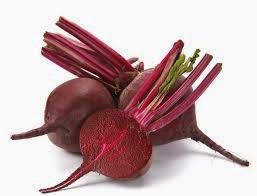
     BEETROOT is Beta vulgaris

    Did you know that the soup that the Russians cooked for the Americans in the soyuz19 in 1975....was borscht, or beetroot soup? Of course!
    Beta vulgaris or Beetroot, started life growing as wild seabeet, along coastlines from India to Britain and is the ancestor of all cultivated forms of beet. At first, only the leaves were eaten.
    Did you also know that Beetroot was offered to Apollo in his temple at Delphi, where it was reckoned to be worth its own weight in silver?
    Beetroot is in the top 10 most popular vegetables for growing in our gardens.
    Who would’ve thought?
    Beta vulgaris, commonly known as beet or beetroot, is a flowering plant species in the family Chenopodiaceae.
    Growing Beetroot is fairly easy and Beetroot can be eaten fresh, stored and pickled so that can be enjoyed all year round.
    When to Plant:
    In cool temperate zones you can plant beets from September through to the end of April, in Arid areas, from February until December, or possibly the end of January and why not?
    In temperate districts plant your seeds from July until April.
    Tropical areas have to wait until March then you’ve got until June, and sub-tropical areas win the jackpot because they can sow beets all year round!
    The seeds of beetroot are best planted at soil temperatures between 7°C and 25°C.
    Did you know that that lumpy thing you get in your seed packet is not just one seed?
    Beetroot  seeds are always made up of a seedball of several seeds.
    For the best germination rate, soak that cluster of seeds, in water in a shallow saucer for around 24 hours before planting..
    When the seedlings come up, if you don't thin them, you will get a number of rather pathetic little plants which don't grow to an edible size.
    So how much space then?
    If you can put a tennis ball between plants, then you’re set.
    Don’t worry if your veggie garden is a bit shade because this is one of those veggies that isn’t too fussy about sun or shade.
     Beetroots can cope with anything from full sun to part shade and even do fairly well in dappled light under a deep rooted tree.
    TIP:
    Don’t over manure or fertilise your soil, because too much nitrogen enhances leaf growth and not root growth – and whaddya want?
    You want  root growth.
    Another thing, beets don’t care much for thick/clay like soil. And don’t expect much if you just plonk them in any old soil that’s not seen fertiliser for a number of years.
    Add lots of liquid fertilisers such as Fish emulsion but remember Seaweed stuff is not a fertiliser.
    Grow them in an raised bed, tub, ezi-planter or yes you can grow beetroot in pots, but they need to be BIG pots, like at least 30cm diameter or those poly styrene jobbies from the green grocer.
    Keep your beets well-watered because if they dry out, they’ll become woody and inedible inside.

    Q. Karen writes in “Why are my beetroots splitting?”

    ANSWER: Karen, you're letting your beetroot get too thirsty watering twice a day will help also don’t use too much fertilizer, forcing them to grow is not a good idea.
    For  really tasty and tender beetroot, start pulling them out at golfball-size. That’s when they are around 3cm in diameter.
    It makes sense to pick or dig up every alternate beet so that more space is left between the ones that are left in the ground. This will help them grow.
     HINT:
    If you’ve tried growing beetroot and not had success - I think it could be too much nitrogen and not enough potassium. Try fertilizing with a fruit/flower type fertilizer or Potash, to get more potassium. Or maybe more patience - my beetroot take a long time for the root to grow.
    When the size of beet reaches about 7.5 cm in diameter they should be definitely dug up after that they won’t be great to eat. Gently dig under the root with a trowel and lift the bulb out of the soil taking care not to damage the outer skin. The less the bulb is damaged the longer the beetroot can be stored for.

    Why not try Burpees Golden-it’s supposed to be really sweet and doesn’t bleed like the red types because it’s gold inside.www.diggers.com.au
    How about Beetroot Cylindra –not round but long, great for pickling because you can squish more into a jar, and hey, you can plant them closer together because they expand downwards and not outwards.
    www.diggers.com.au
    www.organicsaustraliaonline.com.au
    Finally, when you pick them, twist off the leaves.
    Did you know that the leaves of Beetroots are edible? Steam them like spinach, or you could throw into compost.
    Don’t leave the leaves on when storing.
    Store them in the fridge or on a cool, dark shelf. They’ll normally keep for a few weeks when  young and fresh.
    What’s good about Beetroot?
    A cup of beetroot has about 31 calories; 8.5g of carbohydrate, 1.5g of dietary fibre.
    Cooked beetroot is a great source of folate that can protect you against high blood pressure, Alzheimer’s and dementia. Why are they putting folate in bread? Eat a proper diet I say.
    Are you looking for a hangover cure?
    Beta cyanin, the pigment that gives beetroot its colour, is an antioxidant and could key to beating your hangover!
    How so?  Beta cyanin speeds up detoxification in your liver, so your body can  turn the alcohol into a less harmful substance that your body can get rid of faster.

    Beetroot is has a very low Glycemic Index which means it’s converted into sugars very slowly which helps to keep blood sugar levels stable.
    Culinary hints - cooking and eating Beetroot
    Apart from boiling whole for salads, beetroot roast well, cut in wedges.
    They also make a tasty salad grated raw with carrot and a little fresh orange juice.
    If you have any questions about growing beets or beetroot or any other vegetable, JUST EMAIL ME

    AND THAT WAS OUR VEGETABLE HERO SEGMENT FOR TODAY! 

    Design Elements

    with landscape designer Louise McDaid
    Part 4 cool garden design-a woodland garden.
    What do you picture when you think of a woodland garden?
    Do you think of an English woodland with bluebells, English oaks, maples and other northern hemisphere trees? Or do you think of Australian woodland with Eucalypts, grass trees, or casuarinas, underplanted with hardenbergias and boronias and all manner of ferns like birds nest ferns?
    Let’s find out what makes a cooling woodland garden in the last of the series on creating cool gardens….

    Not only trees, shrubs and low ground covers, but seats ponds and even outdoor dining tables can be placed in your  very own woodland garden.
    Even create a teddy bear’s picnic or fairy garden at the bottom for any littlies that might visit your garden. It’ s only limited by your imagination.

     Plant of the Week

    Ferns
    Did you realise that ferns belong to a group of plants called featherplants or pteridophytes, along with club mosses and horsetails.
    Featherplants are among the world’s most ancient plants, found as fossils in rocks 400 million years old.
    Would you believe that there are now 10,000 species of fern living in damp, shady places around the world.
    Ranging from tiny ferns with mossy leaves just 1 cm long to rare tropical tree ferns growing up to 25m tall.

    Here’s a bit of trivia, Coal is made largely of fossilized featherplants of the Carboniferous Period 360 – 286 million years ago.
    Coal is made from dead plants such as ferns. Over 200 million years ago, the ferns would have become buried underground and very gradually turned to cool under the immense pressure of the Earth.
    Ferns produce an underground rhizome that produces fern fronds.
    Fern leaves are called fronds. When new they are curled up like a shepherd’s crook, but they gradually uncurl over time.
    Some ferns are edible.
    Ferns look fragile but are tougher than you think.
    For a low maintenance garden, choose ferns because all you have to do is cut off any dead fronds.
    There’s many fern types for every climate in Australia.
    Ferns are an ancient type of plant that evolved long before conifers and flowering plants. They even reproduce by means of spore rather than seed.
    Their underground parts are rhizomes not roots and they have fronds not leaves.
     
    Australia has 400 of the possible 10,000 fern species available worldwide.
    In some areas, local ferns will colonise a part of your garden.
     
    Bracken Fern and Maiden Hair fern (yes that’s a native) easily colonise a lot of gardens on the east coast of Australia.
     
    If you live in a cool climate, there are a number of Australian native fern species which are relatively easy to grow outdoors in cool climate areas.

    WHAT DO FERNS LIKE?

    Ferns require good drainage and some form of protection, such as overhanging trees, shrubs, a garden wall, the wall of a house or shade cloth, is provided.
    Where there are extremes of dry heat and cold, you need to create a shelter like a shade house that keeps the humidity that ferns need.
    For those people living in Arid areas, also build a shade house for your ferns, where you can go into and relax away from the heat of the day.
    When planning the site for a fern garden, easterly and southerly aspects are preferable. The majority of ferns grow best in filtered sunlight and although some will tolerate direct sunlight, they should not be subjected to it for long periods.
     Frost damage may occur to fronds, but it will not be as severe if regular watering is kept up throughout winter. Damage to foliage may also occur during long periods of dry heat and wind. Damaged fronds will not recover and should be removed.

    Growing ferns indoors

    They mainly need sufficient light, moisture and humidity.
     
    Don’t grow in direct sunlight, very close to windows where they can be burnt or can dry out rapidly.
     
    On the other hand, pale and spindly growth will result if there is not enough light.
     
    A good quality potting mix should be used; one that will drain adequately but still retain sufficient moisture for the plants’ needs.
     
    Lack of humidity caused by heaters drying the air in the house can be a problem to ferns.
    Humidity may be increased by spraying the fronds daily with water or placing the pots on a tray of pebbles with water in the tray.
    As the water evaporates it creates humidity around the plants.
    Rough Maidenhair fern Adiantum hispidulum 
    Recognizable by their fine black stems and frilly fan-shaped leaflets which are really small rhombicpinnules.
    The Maidenhair Fern (Adiantum hispidulum) is very common in the Wet Tropics.
    Found growing in moist open sites along river and track banks.
    Maidenhair Fern is very popular for gardeners and is an ideal house plant.
    The new fronds are a delicate pink colour.
     
    Adiantum aethiopicum (common maidenhair) A dainty-looking fern which grows vigorously with a suckering habit. It quickly outgrows pots and is best planted in the ground in a moist, protected area. It tolerates full sun as long as it has plenty of water.
     
    Asplenium bulbiferum (hen and chicken fern) These ferns usually produce an abundance of plantlets on the pinnae (leaflets). The plantlets grow slowly, and when large enough can be removed and allowed to root into a moist potting mix.